Summer conservation and wildlife update
An update from an eventful summer at Warwickshire's country parks.
It’s been an intense summer across Warwickshire’s country parks and green spaces: the weeks of relentless heat created challenging conditions for our ranger teams, who have also been keeping a careful eye on the impact of the hot weather on our wildlife. At the same time, we welcomed a record number of visitors, with almost 280,000 estimated visitors in July and August, over 1,100 people attending ranger-led events, and 3500+ total attendees taking part in Park Yoga!
With the heatwave having now transitioned almost seamlessly into a deluge of rain, our country parks are turning from amber back to green. And as late summer ambles into early autumn, we’re looking back over the past few months and sharing the wildlife and conservation highlights from Warwickshire’s country parks.
For more updates like this, don’t forget to sign up for our monthly newsletter.
A rare sighting at Kingsbury Water Park
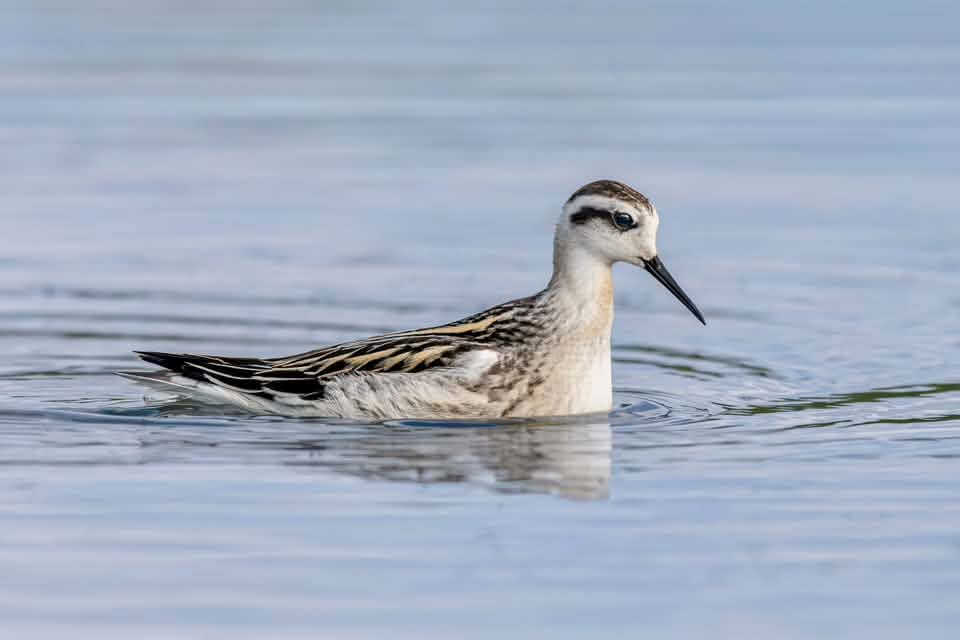
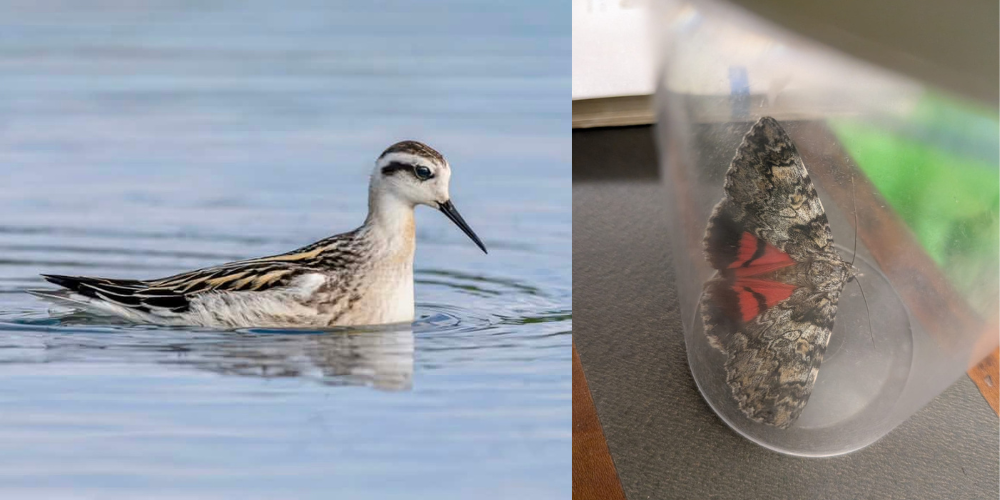
We had a very special sighting on Bodymoor Heath Water at Kingsbury Water Park in August: a Red Necked Phalarope! These delicate waders are on the Red List for Birds of Conservation Concern, and we’ll be keeping a close eye out for any further signs of them at our park. Other notable sightings recently include a little gull and a possible black tern.
Elsewhere, the Kingsbury ranger team and volunteers have been busy “balsam bashing”, tackling Himalayan balsam across the park. This invasive non-native plant can grow in dense stands, crowding out native species and leaving riverbanks vulnerable to erosion when it dies back in winter. Our volunteers have put in an incredible effort, clocking up 220 hours of balsam bashing between regular volunteer groups and corporate volunteers from Paragon Bank and the Association of Drainage Authorities. A special mention goes to regular volunteer Mick, who contributed an impressive 50 hours alone!
Ryton Pools: a summer of wildlife discoveries
It’s been an eventful summer for wildlife recording at Ryton Pools, with hundreds of species being monitored and plenty of exciting new discoveries.
The park is now home to 122 recorded bee species with 103 recorded in 2026 alone, following the discovery of four new species this summer. One of the highlights was the rare Bellflower Blunthorn Bee, which relies entirely on bellflowers for its food and nesting.
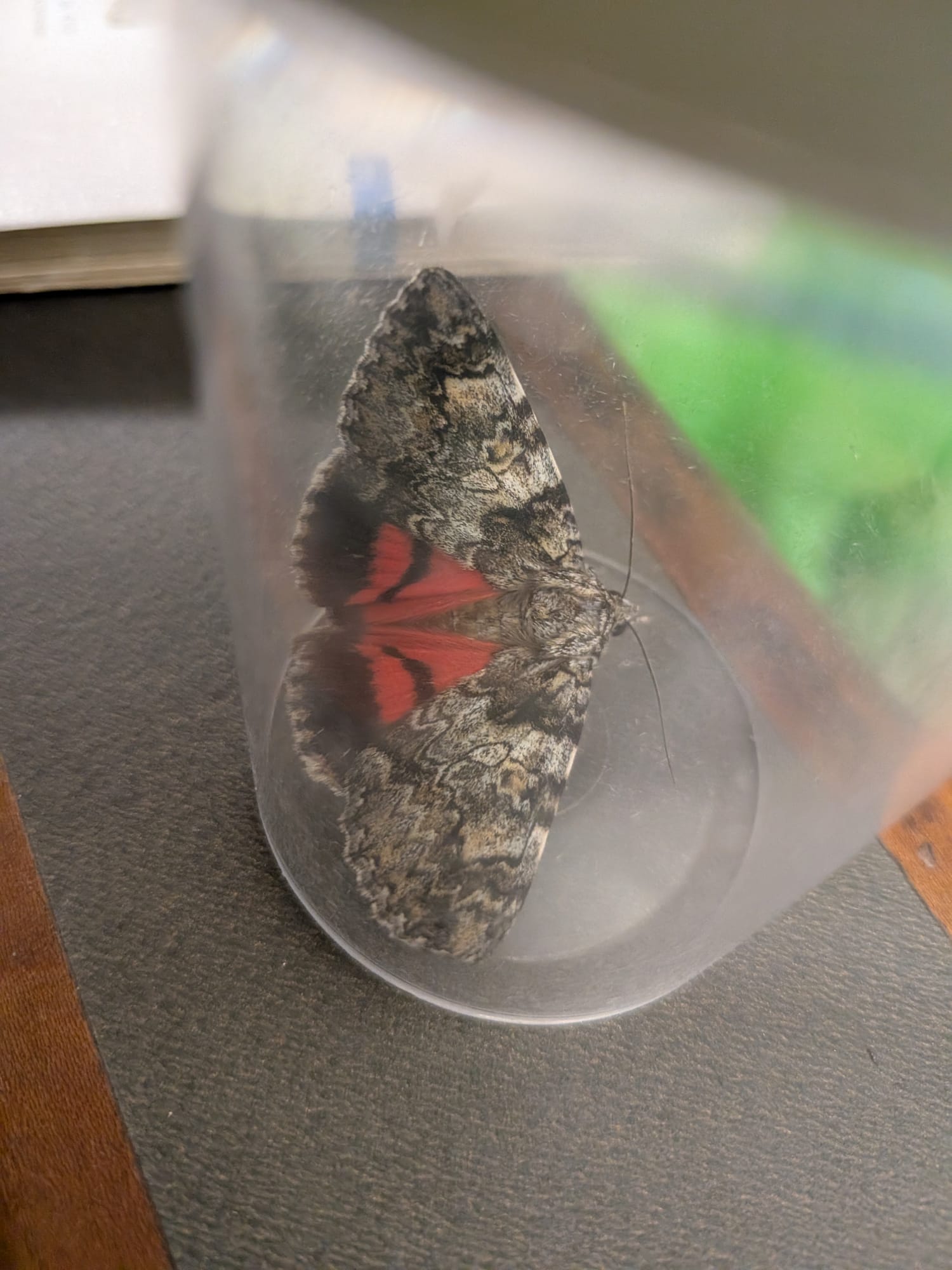
Our micro-moth list has also passed the 500-species mark, with 24 new species added this summer alone. The park has welcomed plenty of Hummingbird Hawk-moths during the warm weather, while the moth traps have turned up some much rarer visitors, including an Eastern Bordered Straw and a spectacular Light Crimson Underwing.
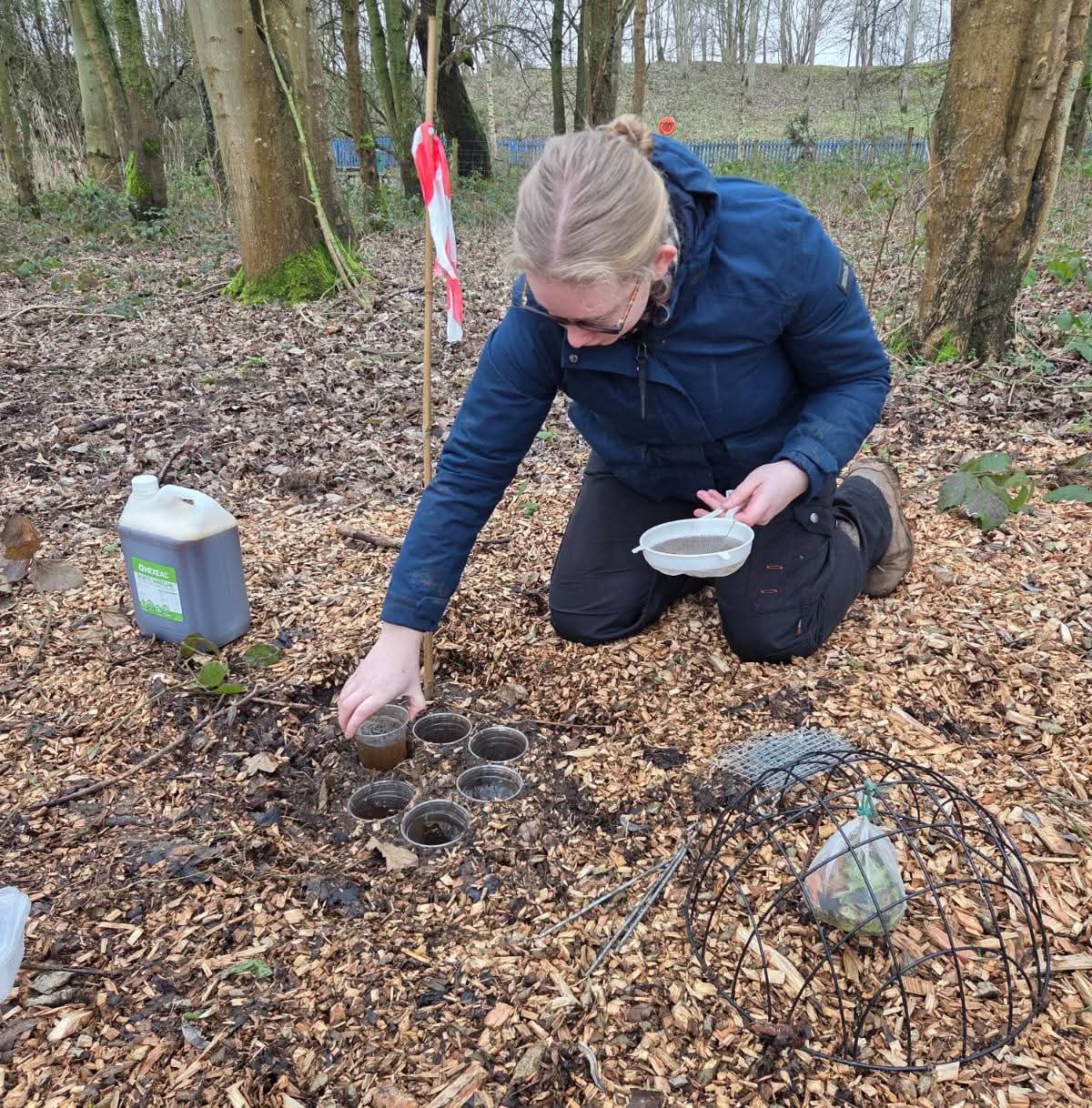
And it’s not just bees and moths making an appearance. This year’s Beetle Blitz, supported by expert entomologist Richard Wright, has uncovered 38 new beetle species, taking the park’s total to more than 600 species. Some rather unusual (and smelly!) bait was used to attract them, including fish, meat, cheese, banana and vegetables.
We’ve also been working with the Warwickshire Bat Group to learn more about Ryton’s bats and are very grateful to Tricia Scott who has found time to share her knowledge and equipment alongside her committed bat rescue work. Recordings made earlier this year revealed a new bat species for Ryton Pools, Natterer’s Bat, with more results still to come.
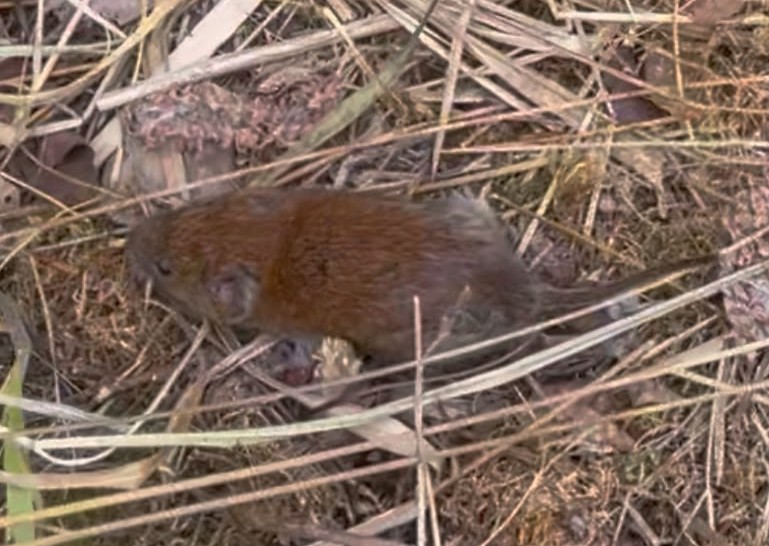
Finally, the persistent hot weather also led to an increase in sightings of small mammals as they searched for food: bank voles, moles and weasels were particularly prolific.
With the extreme weather we're experiencing, it's more important than ever to monitor our wildlife, see how it's adapting, and consider where we need to adapt our conservation and site management work. We would like to say a huge thank you to the experts, volunteers and partner organisations who support our wildlife recording and conservation efforts.
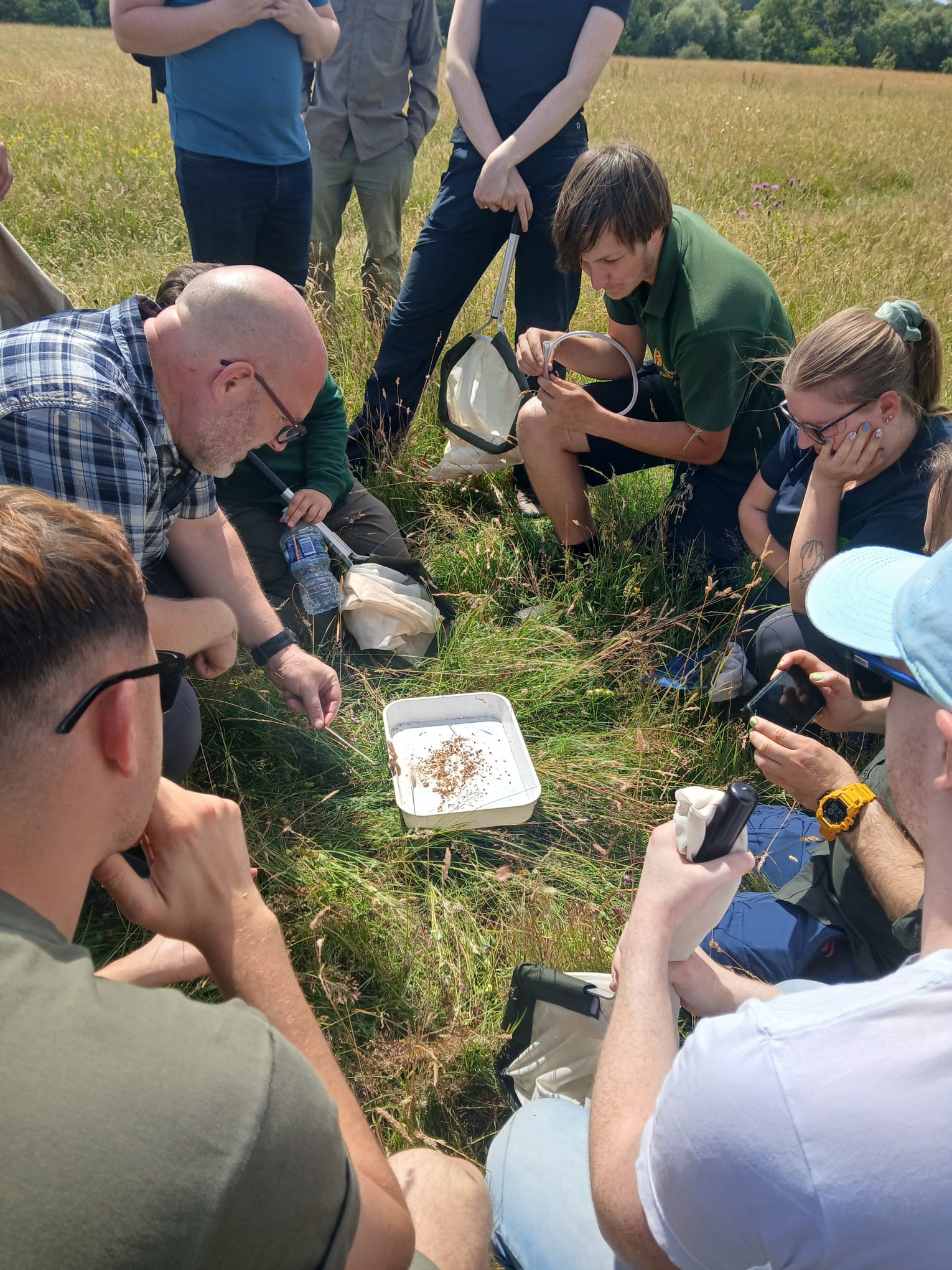
Exchanging wildlife knowledge
In July, Ryton Pools welcomed ecologists from across the UK for RSK Biocensus’ first national entomological training day.
The day gave professionals the chance to develop their wildlife surveying skills across the park, while our own ranger team and university placement student Esther joined in too. It was a brilliant opportunity to share knowledge, discover more wildlife and strengthen our partnership with RSK.
Meadow restoration is making great progress
There was more good news from Ryton Pools in June, when a survey of Offsetting Meadow 1 showed that our restoration work is making excellent progress.
After just eight years of a planned 30-year project, the meadow has already reached its target habitat of Semi-improved Neutral Grassland in moderate condition.
There’s still a little way to go, but the meadow is just 1.5% more wildflower cover away from reaching ‘Good’ condition. Once it gets there, we can look at taking the meadow even further and working towards Lowland Meadow – a UK priority habitat.
Thank you, Esther!
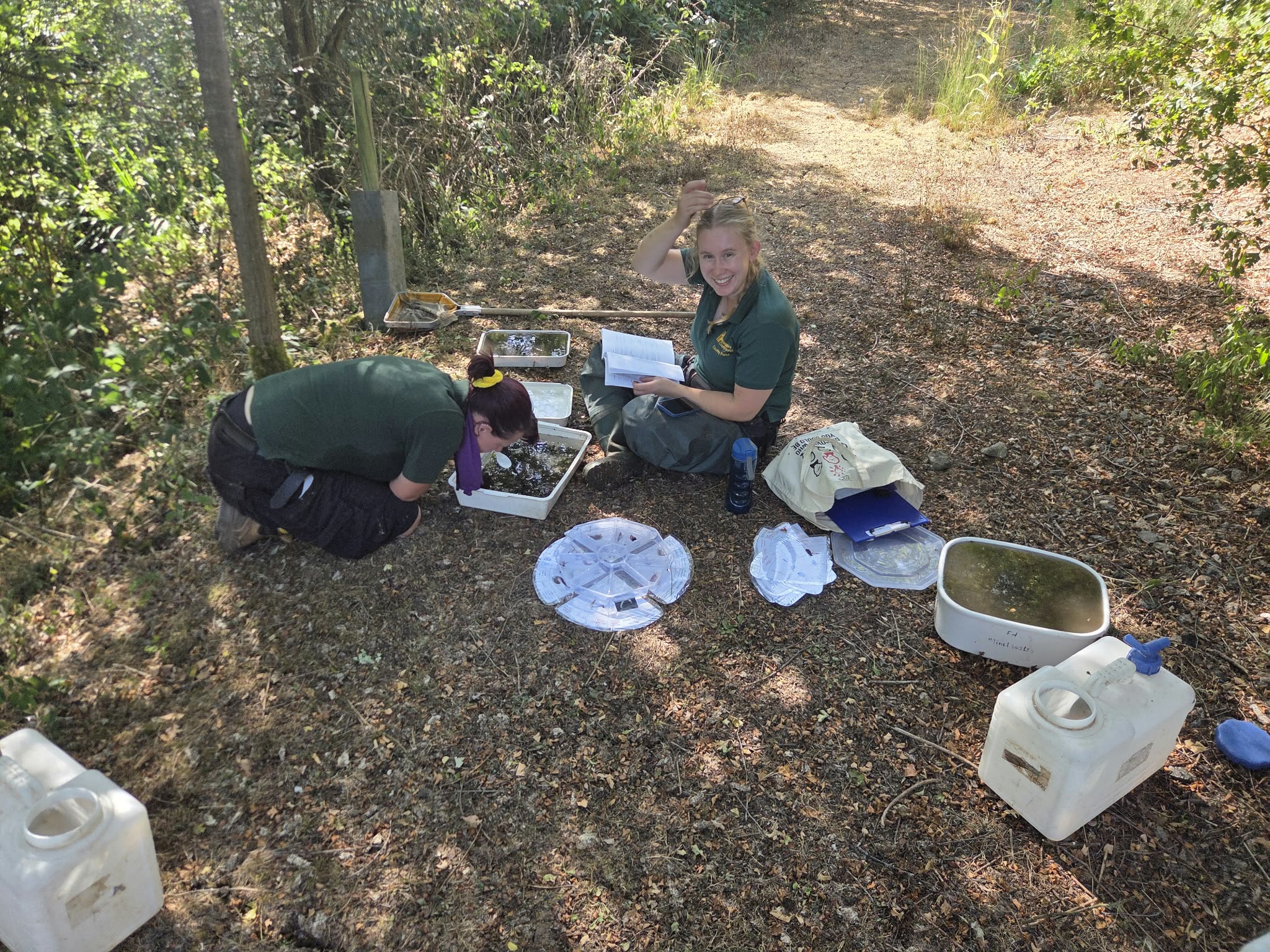
We also said a big thank you and goodbye to university placement student Esther in August, after 11 months with the team.
Esther has got involved in just about every part of life at Ryton Pools, from helping visitors and managing habitats to recording wildlife and supporting events. Her passion for caddisflies, lichens and fungi has been a huge asset, and she’s also become a very accomplished moth recorder during her time with us.
She won’t be disappearing completely, though. Esther will be back at Ryton to carry out research for her dissertation, looking at aquatic wildlife before and after the runoff of leachate, the residual waste water from the site's landfill past.
A huge thank you to Esther for all her hard work and enthusiasm, and best of luck for her final year of studies!
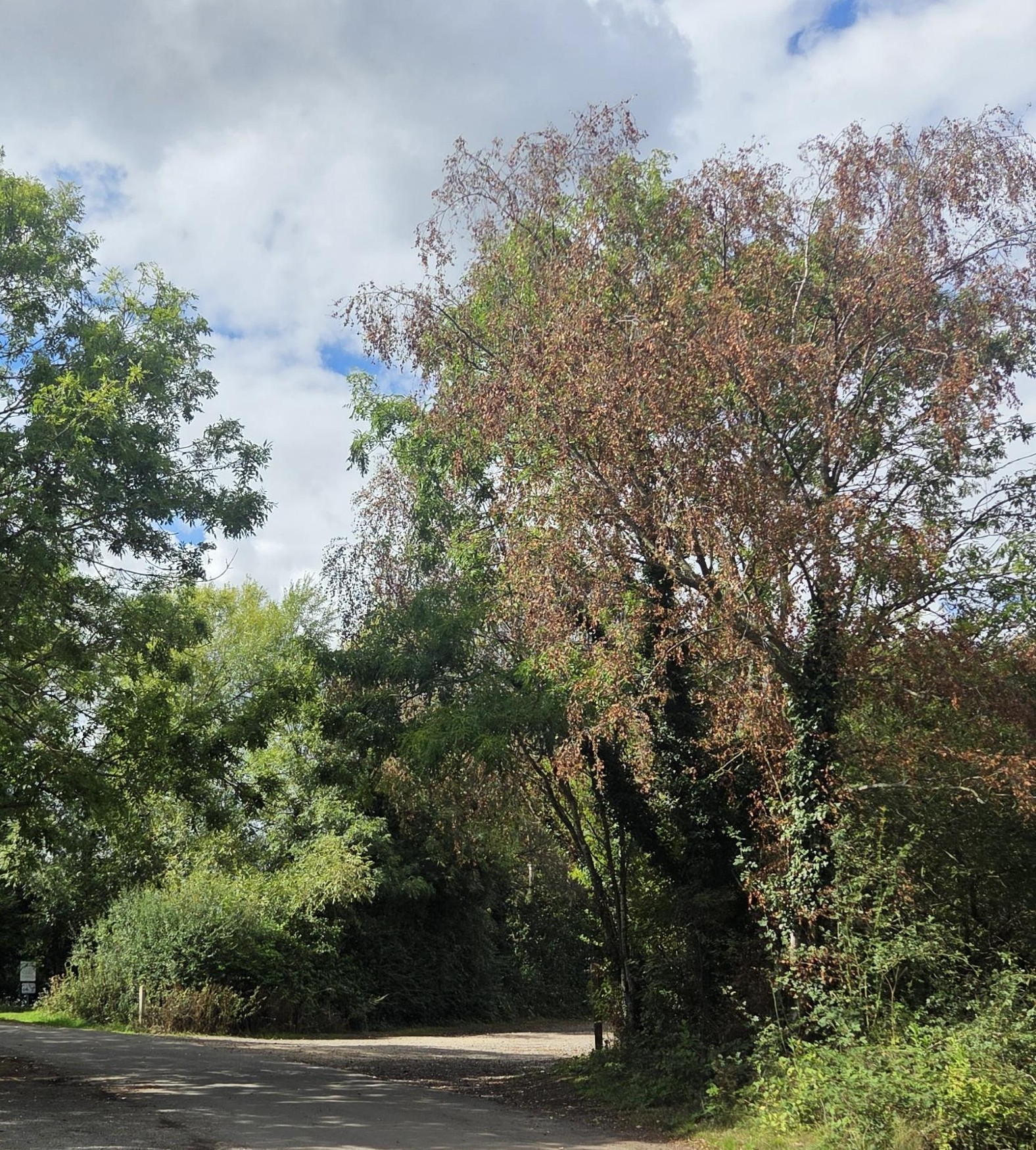
‘False autumn’
Did you start noticing leaves beginning to change colour and fall before we’d even reached the end of August? This phenomenon is known as ‘false autumn’, and is caused by trees experiencing environmental stress due to the prolonged hot weather. Leaves lose moisture through a process called transpiration, so as trees struggle to access enough water, they drop them to reduce water loss and conserve water.
For most trees, this won’t affect their long-term health: they’ve simply entered their dormant phase earlier than normal. However, with this summer’s dry conditions and last year’s mast year, when unusually large amounts of fruits and seeds were produced, it is likely we’ll see a lower yield this autumn.
Taking note of these changes in our natural world is an important part of understanding the impact of environmental changes.
Things to look out for
By Grassland Specialist Ranger Ben Coleman
As the season begins to shift, so we begin to see changes in our wildlife too. Late flowering plants will be out in force and, with the rain more latterly, some species which have been in survival mode may well see a late flowering too before the first frosts arrive to shut the door on the flowering year. Red Bartsia, Devil’s-bit Scabious, Autumn Hawk-bit and Yarrow are all flowers of autumn to keep an eye out for.
Our hedgerows are becoming filled with berries in preparation for Winter with Hawthorn, Wild Roses and Elder doing well this year in areas near water.
Many of our summer migratory species begin to think about moving back south for winter, only to be replaced by species arriving on our shores from further north. Keep your eyes out for Swifts and Swallows migrating south or listen for the last summer call of the Chiff-chaff. The first arrivals of the Scandinavian Thrushes (Redwing and Fieldfare) won’t be far away and, as it grows colder, perhaps even Waxwing feasting on the autumn hedgerow bounty.
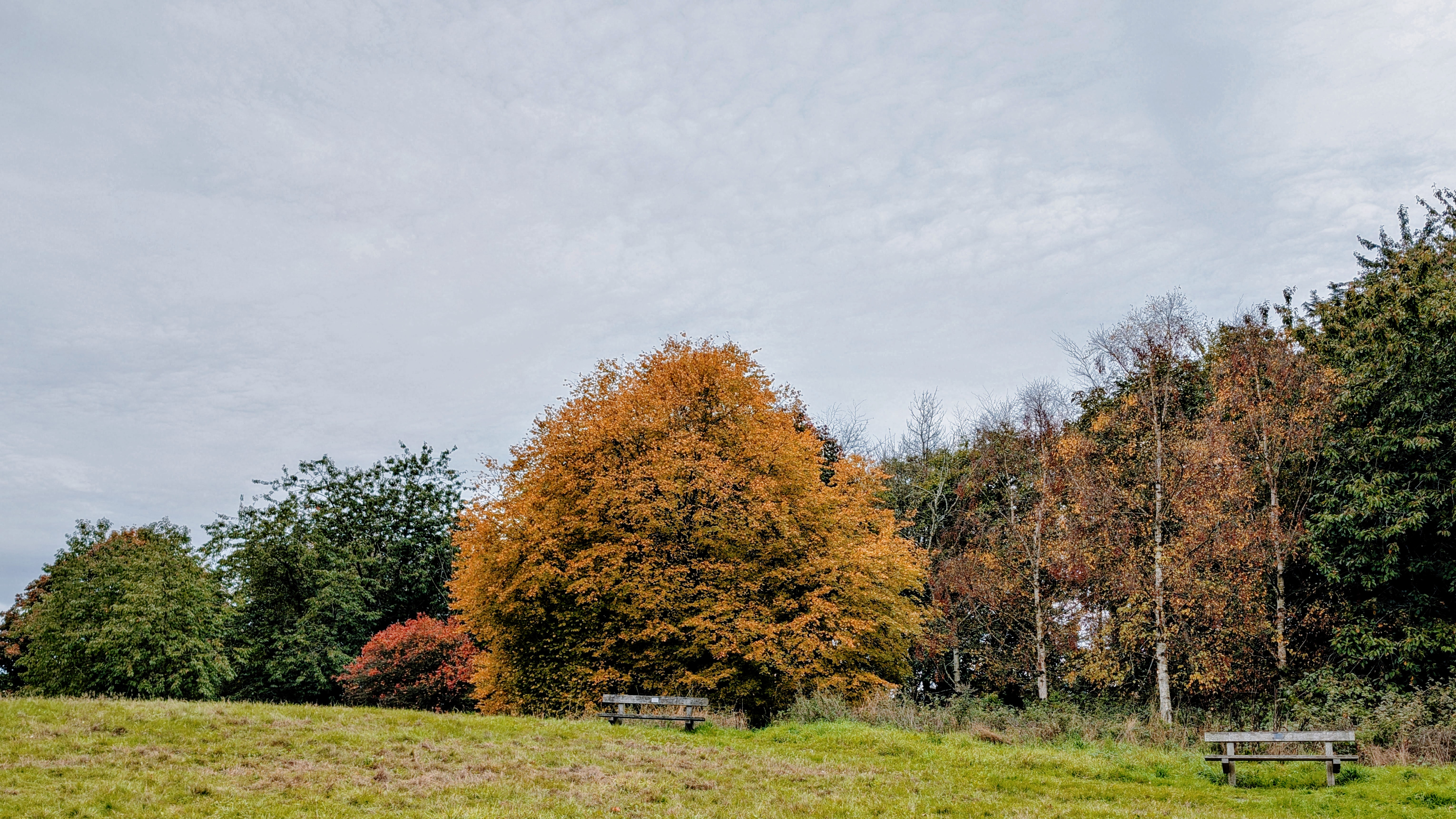
As daylength shortens, changes are triggered across the landscape and as chlorophyll dies off in leaves other beautiful pigments are revealed leading to the colourful autumn bedecking many of our trees. This is likely to happen much earlier this year with many trees drought stressed after the hot dry summer.
As we get some much-needed damper conditions, watch out for a plethora of fungi springing up and doing their work in recycling nutrients across our habitats.